Where this is not real, an arbitrageur might likewise short offer the pricey instrument, and use the proceeds to acquire the correctly priced instrument, pocket the difference, and after that use payments generated to service the instrument which he is brief. While primary payments are not exchanged in a rate of interest swap, presuming that these are gotten and paid at the end of the swap does not alter its worth. Hence, from the point of view of the floating-rate payer, a swap is equivalent to a long position in a fixed-rate bond (i. e. getting set interest payments), and a brief position in a drifting rate note (i.
making floating interest payments): V s w a p = B f i x e d B f l o a t i n g \ displaystyle V _ \ mathrm swap =B _ \ mathrm repaired -B _ \ mathrm floating \, From the perspective of the fixed-rate payer, the swap can be seen as having the opposite positions. That is, V s w a p = B f l o a t i n g B f i x e d \ displaystyle V _ \ mathrm swap =B _ \ chuck mcdowell net worth mathrm floating -B _ \ mathrm repaired \, Similarly, currency what happens when a timeshare is foreclosed on you swaps can be concerned as having positions in bonds whose money flows represent those in the swap.

One-month LIBOR is the rate provided for 1-month deposits, 3-month LIBOR for 3 months deposits, etc. LIBOR rates are determined by trading between banks and alter continually as financial conditions change. Just like the prime rate of interest priced estimate in the domestic market, LIBOR is a reference rate of interest in the worldwide market. Saunders, A.; Cornett, M. (2006 ). Financial Institutions Management. Mc, Graw-Hill Irwin. [] Financial Industry Service Ontology Version 2, Annex D: Derivatives, EDM Council, Inc., Things Management Group, Inc., 2019 " What is a swap?". Investopedia. Retrieved 14 October 2017. John C Hull, Options, Futures and Other Derivatives (6th edition), New Jersey: Prentice Hall, 2006, 149 " Comprehending Derivatives: Markets and Facilities - Federal Reserve Bank of Chicago".
org. Recovered 23 September 2017. Ross; Westerfield & Jordan (2010 ). Basics of Business Finance (9th ed.). Mc, Graw Hill. p. 746. " OTC derivatives data at end-June 2017". www. bis.org. 2017-11-02. Recovered 2018-07-16. " Swaps Execution Facilities (SEFs)". U.S. Product Futures Trading Commission. Obtained 9 December 2019. " Data Repositories". U.S. Commodity Futures Trading Commission. Obtained 9 December 2019. " Bloomberg Launches Its Swap Data Repository". Bloomberg. Recovered 9 December 2019. " CME Swap Data Repository". " Exchange for Swaps". Eurex Exchange. Recovered 8 December 2019. Khwaja, Amir. " 2018 SEF Market Share Data". Clarus, FT. Retrieved 9 December 2019. " Intermediaries". U.S. Commodities Futures Trading Commission. Recovered 8 December 2019.
( 1997 ). " Why firms utilize currency derivatives". Journal of Financing. 52 (4 ): 13231354. doi:10. 1111/j. 1540-6261. 1997. tb01112. x. Goswami, G.; Nam, J.; Shrikhande, M. (2004 ). "Why do global firms use currency swaps?: Theory and evidence". Journal of Multinational Financial Management. 14 (45 ): 315334. doi:10. 1016/j. mulfin. 2004. 03.003. Which of these arguments might be used by someone who supports strict campaign finance laws?. Li, H.; Mao, C. (2003 ). "Business use of interest rate swaps: Theory and proof". Journal of Banking & Financing. 27 (8 ): 15111538. doi:10. 1016/S0378 -4266( 02 )00275-3. " Financial Market Company Ontology" Variation 2, Annex D: Derivatives, EDM Council, Inc., Things Management Group, Inc., 2019 " How Liquid Is the Inflation Swap Market?" Michael J. Fleming and John Sporn, 2013 Frank J.
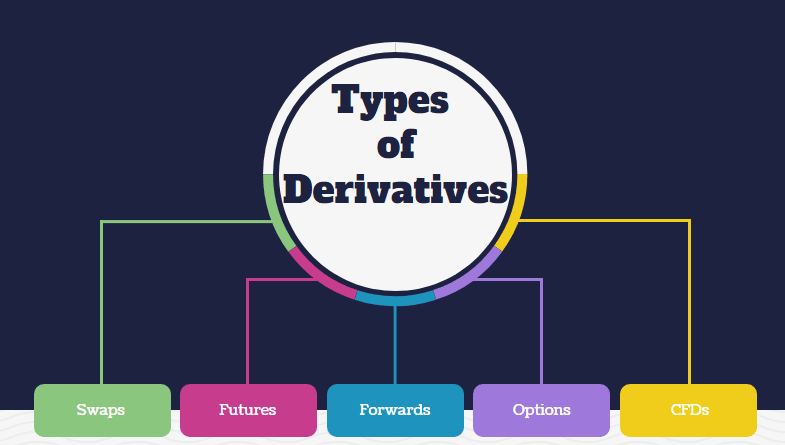
Derivatives contracts can be divided into 2 general families: 1. Contingent claims (e. g., choices) 2. Forward claims, that include exchange-traded futures, forward agreements, and swaps A swap is an arrangement between 2 celebrations to exchange series of capital for a set time period. Typically, at the time the contract is initiated, at least one of these series of cash circulations is identified by a random or unsure variable, such as a rate of interest, foreign exchange rate, equity cost, or commodity rate. Conceptually, one might see a swap as either a portfolio of forward contracts or as a long position in one bond paired with a short position in another bond.
In financing, a swap is an acquired agreement in which one party exchanges or swaps the worths or cash circulations of one asset for another. Of the two cash flows, one worth is repaired and one varies and based upon an index cost, rates of interest, or currency exchange rate. Swaps are customized agreements sold the over-the-counter (OTC) market independently, versus alternatives and futures traded on a public exchange. The plain vanilla interest rate and currency swaps are the two most common and standard types of swaps. Unlike a lot of standardized choices and futures agreements, swaps are not exchange-traded instruments.
Fascination About Trade Credit May Be Used To Finance A Major Part Of A Firm's Working Capital When
Firms and monetary organizations control the swaps market, with few (if any) people ever getting involved. Since swaps happen on the OTC market, there is constantly the danger of a counterparty defaulting on the swap. The very first rates of interest swap took place between IBM and the World Bank in 1981. Nevertheless, regardless of their relative youth, swaps have blown up in popularity. In 1987, the International Swaps and Derivatives Association reported that the swaps market had a total notional worth of $865. 6 billion. By mid-2006, this figure exceeded $250 trillion, according to the Bank for International Settlements. That's more than 15 times the size of the U.S.
The most typical and most basic swap is a plain vanilla rates of interest swap. In this swap, Celebration An accepts pay Party B a fixed, set rate of interest on a notional principal on particular dates for a given time period. Concurrently, Celebration B consents to make payments based on a floating interest rate to Party A on that exact same notional principal on the same defined dates for the same specific time duration. In a plain vanilla swap, the 2 capital are paid in the exact same currency - Trade credit may be used to finance a major part of a firm's working capital when. The given payment dates are called settlement dates, and the times between are called settlement durations.
For instance, on Dec. 31, 2006, Company A and Business B get in into a five-year swap with the following terms: Company A pays Company B a quantity equal to 6% per year on a notional principal of $20 million. Business B pays Business A a quantity equivalent to one-year LIBOR + 1% per annum on a notional principal of $20 million. LIBOR, or London Interbank Offered Rate, is the rate of interest used by London banks on deposits made by other banks in the Eurodollar markets. The marketplace for rate of interest swaps often (but not always) used LIBOR as the base for the floating rate till 2020.
For simpleness, let's presume the 2 celebrations exchange payments annually on December 31, starting in 2007 and concluding in 2011. At the end of 2007, Business A will pay Business B $1,200,000 ($ 20,000,000 * 6%). On Dec. 31, 2006, 1 year LIBOR was 5. 33%; therefore, Company B will pay Business A $1,266,000 ($ 20,000,000 * (5. 33% + 1%)). In a plain vanilla interest rate swap, the drifting rate is normally determined at the beginning of the settlement duration. Usually, swap contracts enable payments to be netted versus each other to avoid unnecessary payments. Here, Company B pays $66,000, and Company A pays nothing.